
Testing resolvers instead of guessing
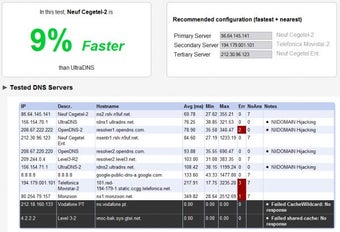
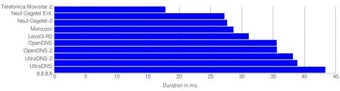
Namebench, created by Thomas Strömberg as a Google 20% project, is a DNS benchmarking tool that compares resolver response times and recommends faster name servers. It can build tests from browser history, standardized datasets, or packet-capture input, then produce an HTML report showing the results. The discontinued utility targets technical users who want evidence-based DNS choices, although modern compatibility is unreliable.
Top Recommended Alternative

Which DNS servers enter the race?
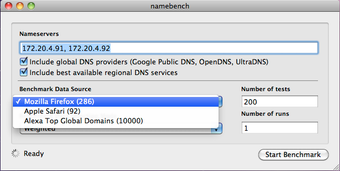
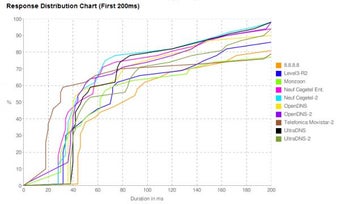
Namebench tests a mixture of ISP-provided resolvers, regional services, and public DNS providers from the user’s actual connection. It ranks candidates according to observed response behavior and latency during the benchmark. This personalized approach can reveal when a public alternative responds faster than the default resolver, although routing, server load, caching, and network conditions can change the outcome of later tests.
Does Namebench change network settings?
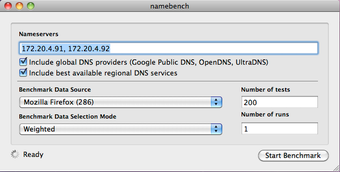
Namebench only performs DNS lookups and provides recommendations, leaving users to update their network settings manually. When browser history supplies the test dataset, visited hostnames become queries sent to the resolvers under evaluation. People who prefer not to use personal browsing data can select a standardized list instead. This nonautomatic approach prevents the program from applying system changes without the user’s involvement.
How much testing happens behind the report?
The benchmark runs repeated queries across several candidate resolvers, which can make each test take multiple minutes. Repetition helps reduce the influence of one unusually fast or slow response and produces a more useful comparison than a single lookup. However, the result remains a snapshot of current conditions rather than a permanent ranking, so another test at a different time can recommend different servers.
Who still gets value from Namebench?
The tool suits network-aware users who can interpret latency reports and manually apply a recommended resolver. Advanced users can also import tcpdump data for more specialized testing. However, the stable release dates from 2010 and depends on legacy components, so current systems can encounter installation or launch failures. The archived project and unfinished replacement provide little reassurance for modern compatibility.
Useful data with a narrow speed benefit
Namebench can help users compare DNS resolver performance through personalized tests and detailed HTML reporting. Its findings can reduce hostname lookup delays, but they do not increase download speeds, improve wireless reception, or accelerate every part of an internet connection. The discontinued build also works inconsistently on modern systems. It remains useful as a technical benchmarking tool in compatible environments, not as a general-purpose internet speed booster.

.png)